Saturday, February 16. 2008
For years, flights between Australia and the United States have been dominated by the Qantas and United Airlines duopoly due to an agreement between the two countries that limited any other airlines flying the route to only four flights per week. This severely limited competition on the route, drove up prices and resulted in poor service, to the extent that serious travellers would only fly with Qantas.
Now, with a new government in Australia, a new open skies agreement has been struck between the two countries, and there are no longer any restrictions on flights for any Australian or US airlines.
Virgin Blue has been planning to fly on this route for a while now, and will commence services towards the end of this year under the banner of V Australia.
The new agreement, however, will not remove restrictions on airlines from other countries on the US-Australia route. Singapore Airlines has long wanted to fly a Sydney to Los Angeles service, but is still hamstrung by Australia's refusal to allow such a move.
Thursday, February 14. 2008
Whenever I travel, I always carry a small, portable shortwave radio with me, mainly to keep up with world news, when I'm travelling through countries where English isn't the main language. You may wonder what the point is, in this age of 24 hour BBC World and CNN satellite television - until you find yourself in a small bed and breakfast or hostel without a television, let alone a satellite receiver.
I was staying in a hostel in Florence back in March 1999, when NATO commenced its bombing campaign over parts of Kosovo and Serbia. The hostel didn't have a TV room, and there was certainly no English programming on the radio in the city at that time; if I hadn't had my shortwave radio with me, I probably wouldn't have even known anything was going on, just across the Adriatic. Now, many might argue that knowing about this might not have helped me in the least - but who knows; I could well have been heading to Croatia at the time, and there's nothing to say the NATO attacks might not have reignited the conflicts that had been going on in that area for many years.
The BBC have announced that their World Service broadcasts to Europe will close on February 18th, 2008. The World Service has been broadcasting in a number of forms since 1938, and has been one of the most reliable broadcasters of news and information programs available, and I dare say has been invaluable to many a traveller on the road in that time. Unfortunately, the BBC now expect people to hear their service via local rebroadcasts (which tend to only be available in big cities, if at all), the internet (hard to get to that when you're on the move) or satellite radio (not exactly something you want to put in your backpack).
It's a pity that the BBC couldn't wait until future technologies, such as portable satellite radio, or Digital Radio Mondiale broadcasts on shortwave, became feasible, because once they have left the shortwave bands in Europe, they are going to be leaving a very big gap for the traveller in times of emergency.
Sunday, February 10. 2008
After reading an article in The Age today that pans the tiny republic of San Marino for having an excess of shops selling rubbish that no-one in their right mind should buy, it occurred to me that none of these shops would survive unless there was actually a market for them.
To be fair, San Marino isn't the only place in that area with an oversupply of plastic trinkets on sale to clueless travellers; I have distinct memories of seeing shady men setting up makeshift stalls on white sheets on the ground, in almost every Italian city that I went to. While on the odd occasion, their wares might have been related to the nearest famous site - for example, plastic colosseums and books on the history of Pompeii (printed in China, of course) - but in general, it was purely junk, like the green plastic soldiers, furnished with a rifle, that vibrate and simulate a real soldier crawling along the ground. While it makes me wonder why anyone would buy such things at all, who would be silly enough to buy them when travelling?.
Many of the vendors clearly aren't operating legally; I recall seeing one vendor, in Venice, having a worried conversation with a colleague who had just arrived upon the scene, and then quickly packing up his trinkets into a white sheet and running off, very fast; two minutes later, two members of the police force casually strolled into the area - I don't know if they were even aware that an illegal vendor had been operating there or not. However, if these men are willing to risk arrest to sell their goods, there must be some pay-off and hence I must come to the conclusion that people are actually buying this rubbish.
I see the same here in Australia; Melbourne's Queen Victoria market is often touted to tourists as a must see, and I'll admit, the atmosphere is fascinating and it's a great place to buy food - but half of its stalls are selling the same Chinese-made junk that are sold in similar markets everywhere on the whole planet. I wouldn't buy any of this in a pink-fit. Do tourists really need fake Gucci handbags? Or even the genuine Gucci handbags, for that matter? Or Bart Simpson t-shirts?
Saturday, February 9. 2008
The French engineering firm Alstom have launched the prototype of their new high-speed AGV train at their rail test centre in La Rochelle. The train, when operational, will be able to travel at 360 km/h, covering a distance of 1000km in just three hours. It will also have more seating than existing TGV trains, with space savings coming from the removal of motor carriages at the ends of the trains - instead, the trains will have distributed motors underneath each carriage.
Friday, February 8. 2008
I've been to Hamburg twice, but didn't ever discover the fascinating Old Elbe Tunnel, which runs under the River Elbe, despite the fact that I was staying at the Auf dem Stintfang International hostel, which is all of two minutes walk from it. I've just found this video, showing one commuter's trip through it.
The tunnel allows for pedestrian, bicycle and motor traffic, but what is particularly interesting about it is that the entrance consists of four huge elevators, rather than a passage to the surface, and cars are physically lowered down to the tunnel and then up again at the far end. Naturally, this doesn't make for very high traffic throughput, and the tunnel is mostly used as a tourist attraction these days.
The northern entrance is close to the Landungsbrücken U-bahn and S-bahn stations; to get there, catch either the S1, S2 or S3 S-bahn lines, or U3 U-bahn line, from Hamburg Hauptbahnhof.
Thursday, February 7. 2008
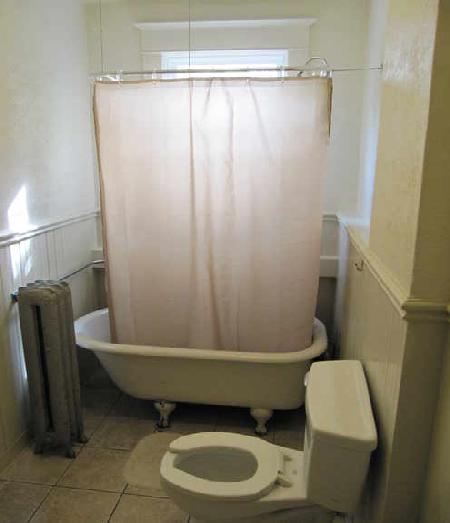
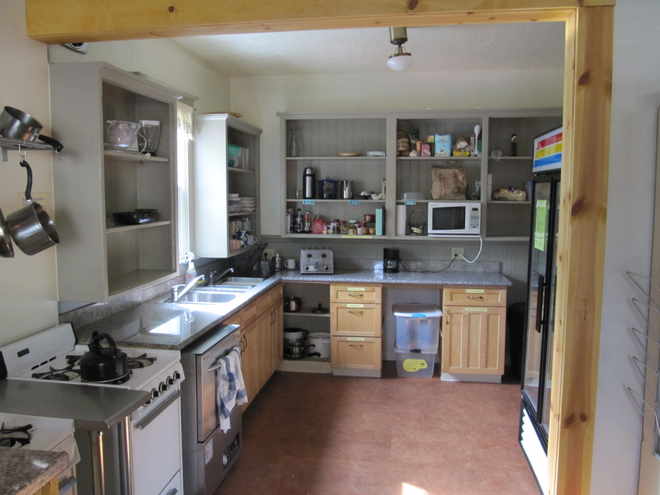
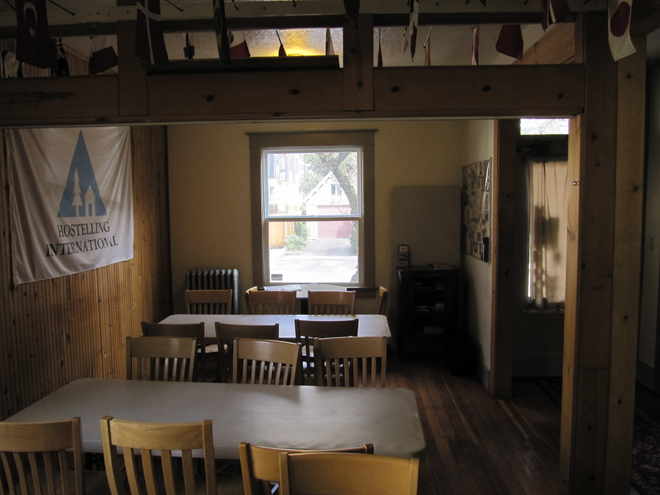
Anyone who's stayed a few nights in a youth hostel with be familiar with the standard fare: large dormitories and shared facilities. Many of us might not want it any other way - although it looks like times might be changing, at least for many UK youth hostels, who will soon be getting a makeover.
A number of new hostels will be opening, and a few - considered lost causes - will be closed. Some of the bigger changes will be the removal of some dormitories, turning them into private rooms, sometimes even with ensuite bathrooms.
This will certainly be a major shift for many hostels, and it makes me wonder whether it will result in price rises - or even an overall drop in the number of beds available for hostellers. Will this have a negative effect on the social atmosphere within hostels? I'm sure that many of us have met people that we probably wouldn't have ever spoken to if we hadn't been sharing a dormitory with them for a number of nights. Will it turn hostels into nothing more than a chain of ultra-economy hotels?
Wednesday, February 6. 2008
AOL Travel has published a list of 10 Destinations Where Your Dollar Goes Far, although after reading through it, I was only able to find the following six:
- Lisbon, Portugal
- Santiago, Chile
- Dubrovnik, Croatia
- Wellington, New Zealand
- Ho Chi Minh City, Vietnam
- Budapest, Hungary
I'm not entirely sure that I can agree with Dubrovnik and Budapest, however; yes, they're definitely cheaper than much of western Europe, but I wouldn't argue that your money goes all that far there. While food and public transport is cheap, accomodation is the killer; I recall the number of hours I spent walking around Dubrovnik trying to find somewhere reasonably priced to stay.
Tuesday, February 5. 2008
I've just noticed on the Scanrail website that their railpass, which covered rail travel in Sweden, Norway, Denmark and Finland, is no longer available; sales of this pass ceased on December 31st, 2007.
This is a shame, because it was possible to purchase the Scanrail pass even after a traveller had arrived in Europe, although with a few restrictions. The only remaining equivalent is the Eurail Scandinavia Pass, which is not available to European residents, and cannot be purchased by travellers already in Europe.
Monday, February 4. 2008
The Northern Territory News reports today that a new luxury passenger service is planned for The Ghan, the famous inland Australia railway line that runs from Adelaide to Darwin.
Prices have not yet been announced, but the article mentions that GSR, the operators of the Ghan, had been studying a similar service that operates in South Africa for $1000 per night. According to GSR's website, they expect the service to begin in late 2008.
Of course, for those of us who can't afford to pay four figures for every night of a trip, there are still the standard classes of travel on the Ghan; it's worth noting on that table that there are significant discounts for members of YHA Australia.
Sunday, January 27. 2008
With a southern-hemisphere summer well and truely in motion, there have been a number of articles in the papers about Australia. Starting with The Guardian, there's a look at Bruny Island, just off the south-eastern coast of Tasmania, along with some photos.
The Dominion Post visits Adelaide, possibly Australia's most underrated city. The Post also goes houseboating on the Murray River, which is sadly still experiencing the effects of a severe drought.
From The Telegraph, we have possibly the least imaginative trip possible, a surfing holiday on Bondi Beach; but then it recovers with a couple of stories on South Australia's Flinders Ranges, and New South Wales' southern coast.
Finally, the NZ Herald has a glimpse at a different side of Sydney.
Thursday, January 24. 2008
With reports that Ryanair is to, once again, increase their checked baggage levy, I have to now ask the question - is it really worth the hassle flying a budget airline? How many passengers can really travel with only cabin luggage? And do you really want to be flying aboard an airline where you're fighting to get past everyone else's baggage?
It's rare now to see a day pass without yet another story-from-hell about a budget airline. In recent days, there has been talk on the radio in Australia that the new entrant to the skies here, Tiger Airways, does not allow passengers to consume their own food on-board, forcing them to buy their on-board meals, if they wish to eat. Perhaps not an issue on a short-hop Melbourne to Sydney flight, but on a long flight to Perth, you could be quite hungry if you don't want to be stuck paying through the nose for their meals.
There has been more trouble with Tiger, with reports of passengers being stranded in Melbourne when Tiger cancelled its Sunday flight to Mackay, telling them they'd have to wait until the following Friday.
Today, there's a report of budget airline Pacific Blue hunting down its passengers who were last aboard, to remove them from the flight, due to understaffing.
Add to this the fact that many budget airlines use inconvenient airports - for example, in Melbourne, a number of Jetstar flights leave from Avalon Airport, which is even more difficult to get to than Melbourne's already badly accessible Tullamarine Airport - and in many cases, costs of getting from the airport to your final destination may well exceed what you paid for the flight. Not to mention the time wasted getting there.
I tend to stick to flying with Qantas, in Australia. Yes, it generally costs a bit more, but they still do have good deals advertised on their website - and I can then be reasonably confident that if they cancel my flight, I'll be booked onto a replacement flight quite quickly.
Tuesday, January 22. 2008
Anyone who has flown a long-haul flight knows just how bad jet-lag can be. Having done an Australia to Europe crossing (and back) every year from 1999 until 2005, I've had more than my fair share of a week of waking up at 1am, absolutely unable to sleep, and then collapsing the following day around 2pm.
The good news is that researchers have found one of the contributing factors to post-flight fatigue is swollen ankles and that by wearing tights could go some way to alleviating the problem.
Unfortunately, this still won't help with the major time shifts that your body is subjected to when dragged halfway across the planet in such short time, so what other options are available?
My personal jet-lag routine is to dose-up on caffeine when I arrive at my destination, spend as much time outside in sunlight as I can, and try to fight off the urge to sleep in the late afternoon. Sleeping tablets, or those herbal tablets that result in drowsiness can help with lying awake in the middle of the night, but can also result in grogginess the next morning.
Another option is melatonin tablets. I tried these once, and they seemed to help, but there are questions over certain adverse health affects that they might have, and furthermore, they're illegal in some countries.
What do you do to combat jet-lag?
Sunday, January 20. 2008
Travelodge is building a hotel in West London made from 86 modified shipping containers. When completed in June, it is expected that rooms in the hotel will cost around €25 per night, less than a third of the cost of the nearest Travelodge in Slough, and cheaper than the nearest youth hostel.
The rooms are pre-fabbed in China, shipped out to the UK, where they are installed and then will be decorated. It is intended that the rooms are recyclable and although the words eco-friendly have been touted in relation to this building, I have to wonder what the insulation is going to be like. How are shipping containers going to deal with an unusually hot summer?

Wednesday, January 9. 2008
With a European winter now in full swing, the newspapers are full of European alpine ideas. Firstly, we have the New York Times with an article on night skiing in St Moritz - if you can afford to stay there, that is. Fortunately, it's not the only resort they list.
Still on Switzerland, the Independent goes ballooning in Château d'Oex, but at €227 for an hour's flight, it makes the aforementioned accomodation in St Moritz look like a night in a run-down motel.
The Independent also has a look at skiing in some of the lesser known areas of Austria's Tyrol region; and while you're there, why not have a weekend in Innsbruck?
Monday, January 7. 2008
With oil prices now trading at US$114 per barrel, Qantas has now increased its fuel surcharge to $210 on flights to Europe, and to $165 to Africa and the Americas, which means higher airfares for anyone travelling to or from Australia.
The really interesting aspect to all this, however, is that oil prices decreased for a short period, at the beginning of 2007; where was the corresponding decrease to Qantas' fuel surcharge?
|